



What Industries Use Large Compression Springs? Applications and Benefits Explained
What Industries Use Large Compression Springs?
Large compression springs are critical components in many heavy-duty industries. Designed to absorb shock, store energy, and withstand substantial loads, these springs help improve equipment performance, safety, and durability.
From railway systems and mining equipment to construction machinery and power generation facilities, large compression springs are used wherever high force and reliable mechanical movement are required.
What Is a Large Compression Spring?
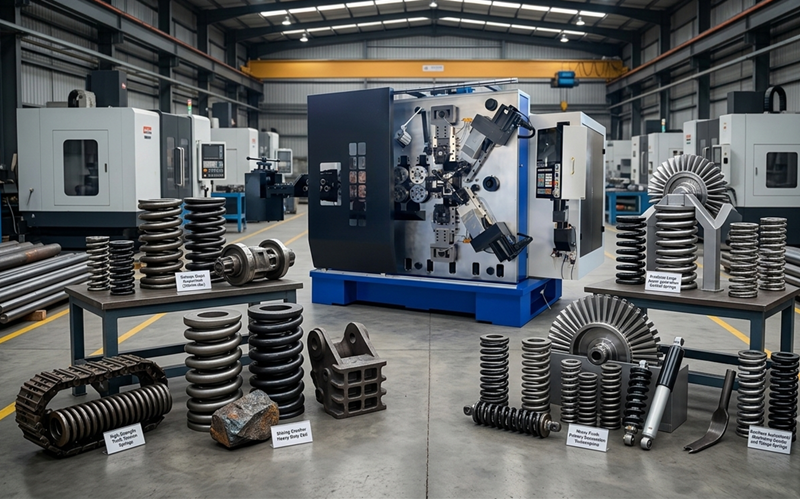
A large compression spring is a helical spring manufactured from thick wire or bar material and designed to operate under compressive loads.
Compared with standard springs, large compression springs offer:
Higher load capacity
Greater durability
Longer service life
Enhanced shock absorption
Superior fatigue resistance
These characteristics make them ideal for demanding industrial applications.
1. Automotive Industry
The automotive sector is one of the largest users of compression springs.
Common Applications
Truck suspension systems
Heavy-duty vehicle chassis
Commercial vehicle shock absorption
Off-road vehicle suspension
Large compression springs help support vehicle weight, absorb road impacts, and improve ride stability.
Benefits
Improved driving comfort
Enhanced vehicle control
Increased component lifespan
2. Railway Industry
Railway systems rely heavily on large compression springs for safety and ride performance.
Common Applications
Railcar suspension systems
Bogie assemblies
Vibration isolation systems
Coupling mechanisms
Large springs reduce vibration and help maintain stability under varying track conditions.
Benefits
Passenger comfort
Reduced equipment wear
Improved operational safety
3. Mining Industry
Mining equipment operates in harsh environments and experiences extreme loads.
Common Applications
Vibrating screens
Crushers
Conveyor systems
Heavy-duty processing equipment
Compression springs absorb impact forces and protect machinery from excessive stress.
Benefits
Reduced maintenance costs
Improved equipment reliability
Extended service life
4. Construction Equipment Industry
Construction machinery requires robust components capable of handling continuous heavy loads.
Common Applications
Excavators
Loaders
Bulldozers
Road construction equipment
Large compression springs help absorb shocks and support critical mechanical systems.
Benefits
Better equipment performance
Reduced vibration
Increased durability
5. Energy and Power Generation Industry
Power plants and energy facilities use compression springs in a variety of applications.
Common Applications
Industrial valves
Turbine systems
Pressure control equipment
Power generation machinery
These springs help regulate movement and maintain reliable operation under demanding conditions.
Benefits
Consistent performance
Improved operational safety
Reduced downtime
6. Agricultural Machinery Industry
Modern agricultural equipment often incorporates heavy-duty spring systems.
Common Applications
Seeders
Harvesters
Cultivators
Agricultural suspension systems
Large compression springs help equipment adapt to uneven terrain and varying loads.
Benefits
Improved productivity
Reduced equipment stress
Better field performance
7. Industrial Manufacturing Equipment
Many manufacturing systems depend on compression springs for force control and shock absorption.
Common Applications
Industrial presses
Material handling equipment
Automated production systems
Packaging machinery
These springs contribute to efficient and reliable machine operation.
Benefits
Precise force control
Reduced machine wear
Increased production efficiency
8. Marine and Offshore Industry
Marine equipment often operates under heavy loads and harsh environmental conditions.
Common Applications
Offshore platforms
Dock equipment
Heavy lifting systems
Marine machinery
Large compression springs help absorb dynamic loads and reduce mechanical stress.
Benefits
Improved equipment reliability
Enhanced safety
Longer operational life
9. Aerospace and Defense Industry
Although aerospace applications often require specialized spring designs, large compression springs are used in certain ground-support and defense systems.
Common Applications
Launch support equipment
Military vehicles
Heavy-duty mechanical assemblies
Benefits
High reliability
Excellent fatigue performance
Consistent operation
Why Large Compression Springs Are Important
Regardless of industry, large compression springs perform several essential functions:
Shock Absorption
They absorb impact energy and reduce vibration.
Load Support
They support heavy mechanical loads without permanent deformation.
Energy Storage
They store and release mechanical energy efficiently.
Equipment Protection
They help prevent damage to machinery and structural components.
How Large Compression Springs Are Manufactured
Modern heavy-duty springs are typically produced using advanced CNC spring machines and specialized coiling equipment.
Key manufacturing stages include:
Material selection
Wire preparation
Spring coiling
Heat treatment
End grinding
Surface treatment
Load testing
Quality inspection
Precision manufacturing ensures consistent spring performance in demanding applications.
Choosing the Right Compression Spring
When selecting a large compression spring, engineers typically consider:
Load requirements
Spring rate
Wire diameter
Spring dimensions
Fatigue life
Operating environment
Corrosion resistance
Proper spring selection directly affects equipment performance and reliability.
Conclusion
Large compression springs are widely used across industries that require reliable load support, shock absorption, and mechanical energy storage. Automotive, railway, mining, construction, energy, agriculture, manufacturing, marine, and defense sectors all depend on heavy-duty springs to ensure safe and efficient operation.
As industrial equipment becomes more advanced, the demand for high-quality large compression springs continues to grow, making them a vital component in modern engineering and manufacturing.