



What Is Spring Pitch? Understanding Spring Pitch in Spring Design and Manufacturing
What Is Spring Pitch?
Spring pitch is one of the most important parameters in spring design and manufacturing. Whether producing compression springs, extension springs, or custom coil springs, understanding spring pitch is essential for achieving the desired performance, load characteristics, and dimensional accuracy.
In simple terms, spring pitch refers to the distance between corresponding points on adjacent coils of a spring. It determines the spacing between coils and directly affects how the spring compresses, expands, and performs under load.
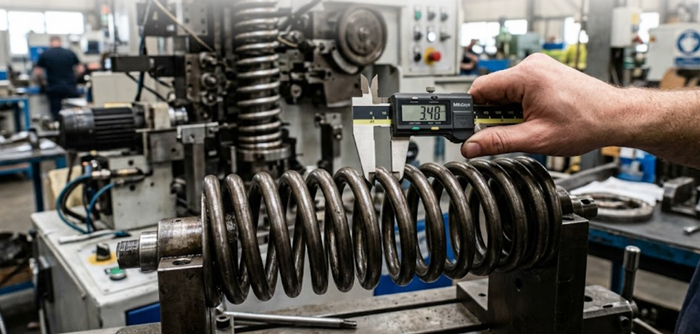
Definition of Spring Pitch
Spring pitch is the axial distance from the centerline of one coil to the centerline of the next coil.
For compression springs, pitch is commonly measured as the distance between adjacent coils when the spring is in its free (unloaded) state.
The pitch can be:
Constant pitch – equal spacing between all coils.
Variable pitch – different spacing between coils along the spring length.
Why Is Spring Pitch Important?
Spring pitch has a significant impact on spring performance and functionality.
1. Affects Spring Deflection
The spacing between coils influences how much a spring can compress under load. Springs with larger pitch generally allow greater movement before the coils touch each other.
2. Influences Load Characteristics
Pitch affects the spring rate and load distribution. Proper pitch design helps achieve the desired force and compression characteristics.
3. Prevents Coil Binding
If the pitch is too small, adjacent coils may contact each other prematurely during compression, causing coil binding and reducing spring effectiveness.
4. Improves Product Consistency
Accurate pitch control ensures consistent spring dimensions and performance, especially in high-volume manufacturing environments.
How Is Spring Pitch Measured?
For a spring with uniform spacing, pitch can be calculated using the following formula:
Pitch = Free Length ÷ (Number of Active Coils - 1)
In practical manufacturing, spring pitch is often measured using:
Digital calipers
Optical measuring systems
Spring testing equipment
Automated inspection systems
Types of Spring Pitch
Constant Pitch Springs
All coils are evenly spaced.
Advantages:
Simple manufacturing
Uniform spring rate
Consistent performance
Common applications:
Automotive components
Industrial machinery
General-purpose compression springs
Variable Pitch Springs
Coil spacing changes along the spring length.
Advantages:
Progressive spring rate
Better shock absorption
Improved load distribution
Common applications:
Automotive suspension systems
High-performance mechanical assemblies
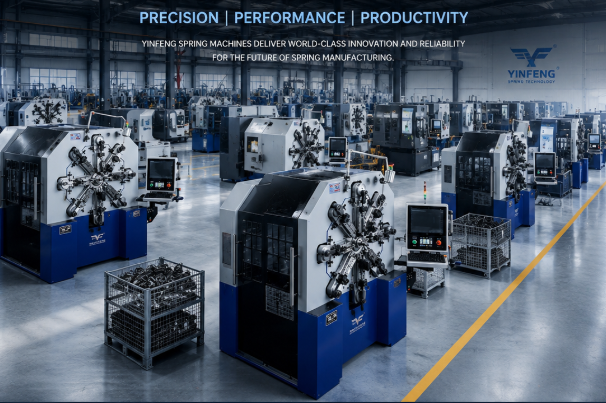
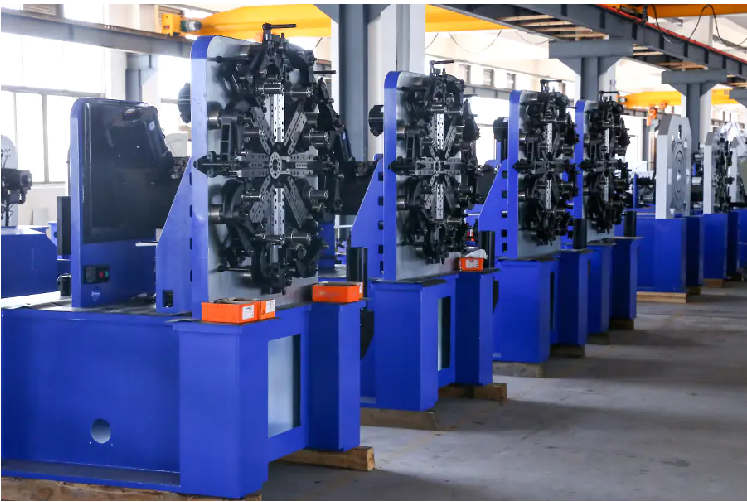
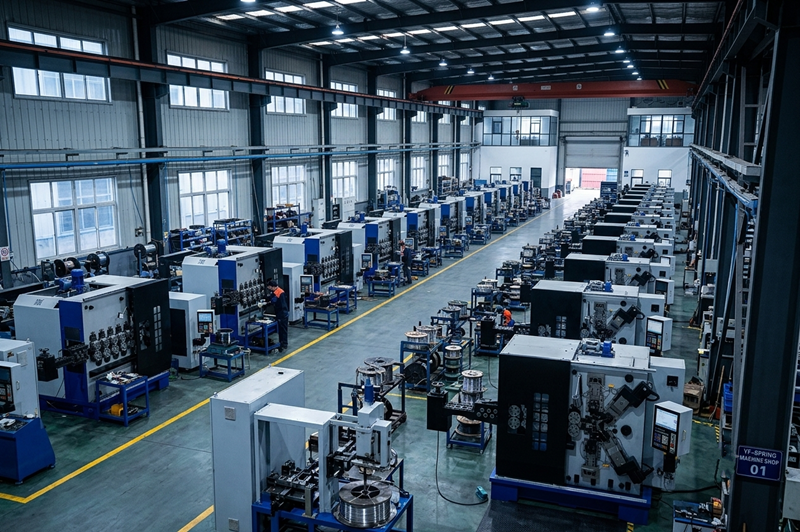
Spring Pitch and CNC Spring Machines
Modern CNC spring machines precisely control pitch through servo-driven wire feeding and coiling systems.
Benefits include:
High pitch accuracy
Reduced production variation
Faster setup and adjustment
Consistent spring quality
Manufacturers can program different pitch values directly into the CNC control system, allowing rapid production of custom spring designs.
Common Spring Pitch Problems
Several issues can occur when pitch is not properly controlled:
Uneven Pitch
Causes:
Tool wear
Incorrect machine setup
Servo synchronization errors
Incorrect Pitch Value
Causes:
Programming mistakes
Calibration issues
Material feeding inconsistencies
Pitch Variation During Production
Causes:
Wire quality variations
Mechanical vibration
Insufficient machine maintenance
Regular inspection and preventive maintenance can minimize these problems.
Conclusion
Spring pitch is a critical factor in spring design, performance, and manufacturing quality. It determines coil spacing, affects spring behavior under load, and plays a major role in preventing coil binding and ensuring consistent operation.
With modern CNC spring machines, manufacturers can achieve highly accurate pitch control, resulting in better product quality, improved efficiency, and reliable spring performance across a wide range of industrial applications.