



What Is the Maximum Wire Diameter a CNC Spring Machine Can Process?
What Is the Maximum Wire Diameter a CNC Spring Machine Can Process?
One of the most important specifications when selecting a CNC spring machine is its wire diameter capacity. The maximum wire diameter determines the size and type of springs the machine can manufacture, directly affecting production capability and application range.
The answer varies depending on the machine design, motor power, forming system, and intended application. Small CNC spring machines may process fine wire for electronics, while heavy-duty machines can handle thick steel wire used in railway, mining, and construction equipment springs.
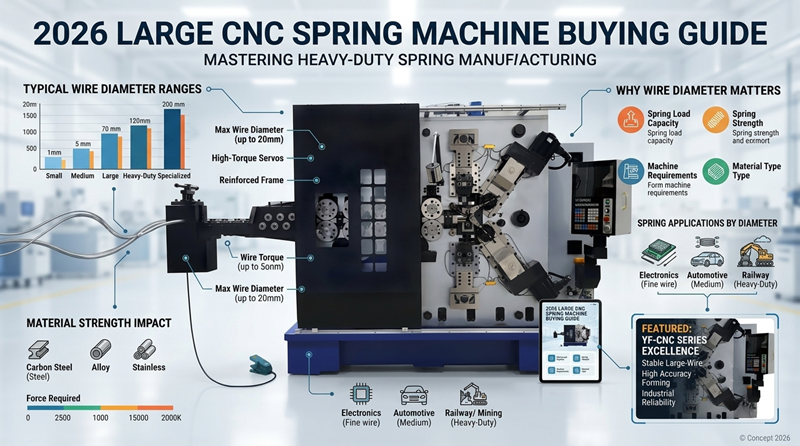
Why Wire Diameter Matters
Wire diameter has a major impact on:
Spring load capacity
Spring strength
Product size
Machine requirements
Production costs
As wire diameter increases, the force required to bend and form the material increases significantly. This is why larger spring machines require stronger frames, more powerful servo motors, and heavy-duty tooling.
Typical CNC Spring Machine Wire Diameter Ranges
The following ranges are commonly found in the spring manufacturing industry:
| Machine Type | Typical Wire Diameter Range |
|---|---|
| Small CNC Spring Machine | 0.15 mm – 3.0 mm |
| Medium CNC Spring Machine | 2.0 mm – 8.0 mm |
| Large CNC Spring Machine | 6.0 mm – 16.0 mm |
| Heavy-Duty CNC Spring Machine | 12.0 mm – 25.0 mm |
| Specialized Large Spring Machine | 20.0 mm – 40.0 mm+ |
Actual capacity depends on machine configuration and material type.
Factors That Affect Maximum Wire Diameter
1. Machine Power
Thicker wire requires more forming force.
Machines processing large wire diameters typically include:
High-torque servo motors
Heavy-duty gear systems
Reinforced feeding mechanisms
Insufficient motor power can lead to inaccurate forming and excessive machine wear.
2. Material Type
Different materials require different forming forces.
Examples include:
High-carbon spring steel
Stainless steel
Chrome silicon steel
Chrome vanadium steel
Alloy spring steel
A machine may process a larger diameter of softer material but a smaller diameter of higher-strength alloy steel.
3. Spring Design
Wire diameter capacity also depends on the spring geometry.
Factors include:
Coil diameter
Number of coils
Spring index
Pitch design
Complex spring shapes often reduce practical capacity compared to simple compression springs.
4. Forming Technology
Advanced CNC machines with optimized tooling and servo systems can often process larger wire diameters more efficiently than older designs.
Wire Diameter and Spring Applications
Fine Wire Springs (0.15–3 mm)
Applications:
Electronics
Medical devices
Precision instruments
Consumer products
Medium Wire Springs (3–8 mm)
Applications:
Automotive components
Industrial equipment
Household appliances
Large Wire Springs (8–16 mm)
Applications:
Truck suspension systems
Agricultural machinery
Industrial machinery
Heavy-Duty Springs (16–40 mm+)
Applications:
Railway systems
Mining equipment
Construction machinery
Energy industry equipment
Large CNC Spring Machines for Heavy-Duty Applications
Manufacturers producing large compression springs require machines specifically designed for thick wire processing.
Key features include:
Reinforced machine structure
High-power servo motors
Heavy-duty coiling systems
Advanced CNC control
Stable wire feeding
These features help maintain accuracy and consistency when forming large-diameter wire.
Example: YF-CNC-86160 Large Spring Machine
For heavy-duty compression spring production, the YF-CNC-86160 is designed to process large wire diameters and manufacture springs for demanding industrial applications.
Typical applications include:
Railway suspension springs
Mining equipment springs
Construction machinery springs
Industrial heavy-load springs
Advantages include:
Stable large-wire processing
CNC servo control
High forming accuracy
Reliable long-term operation
Suitable for continuous industrial production
(Actual wire diameter capacity should be specified according to the machine's official technical specifications.)
How to Choose the Right Wire Diameter Capacity
When selecting a CNC spring machine, consider:
Current Production Needs
What wire diameters are you using today?
Future Business Growth
Will you produce larger springs in the future?
Material Types
Different materials require different machine capabilities.
Product Variety
A wider product range may require a machine with greater capacity and flexibility.
Choosing a machine that is too small can limit future growth, while choosing an oversized machine may increase unnecessary investment costs.
Common Mistakes When Evaluating Wire Capacity
Avoid these common purchasing mistakes:
Focusing only on maximum wire diameter
Ignoring material strength requirements
Overlooking spring geometry limitations
Not considering future production plans
Comparing machines without reviewing actual production samples
A machine's real-world performance is often more important than its theoretical maximum specifications.
Conclusion
The maximum wire diameter a CNC spring machine can process depends on machine size, motor power, material type, tooling design, and spring complexity. While small CNC machines may handle wire under 3 mm, heavy-duty spring machines can process wire diameters exceeding 20 mm and, in some cases, more than 40 mm.
For manufacturers producing large industrial springs, selecting a machine with the appropriate wire diameter capacity is essential for ensuring productivity, product quality, and long-term business growth.