What Is a Wire Forming Machine? A Complete Beginner's Guide
What Is a Wire Forming Machine? A Complete Beginner's Guide
Wire forming machines are widely used in modern manufacturing to produce various wire components with high precision and efficiency. From automotive clips and hooks to medical components and custom wire shapes, wire forming technology has become an essential part of many industries.
If you are new to this equipment, this guide will help you understand what a wire forming machine is, how it works, and where it is used.
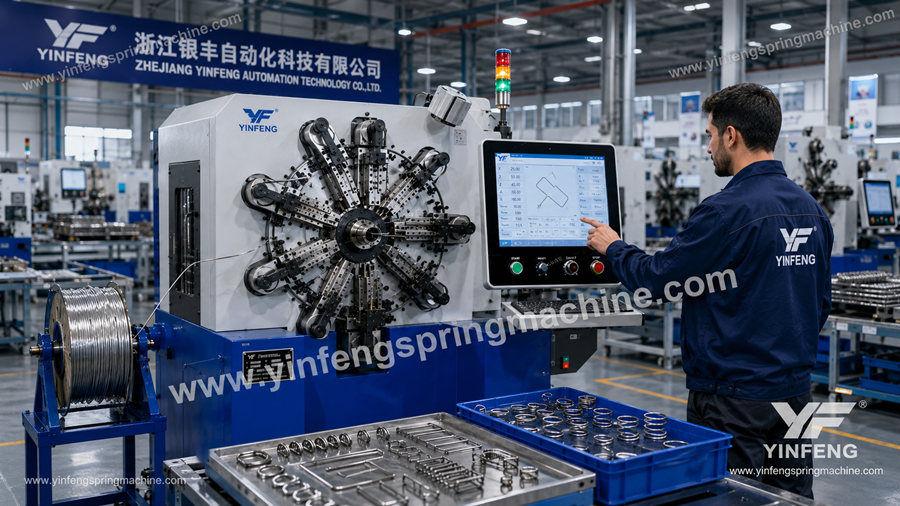
What Is a Wire Forming Machine?
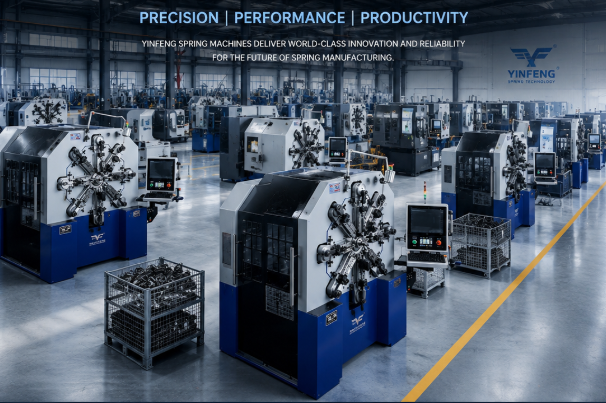
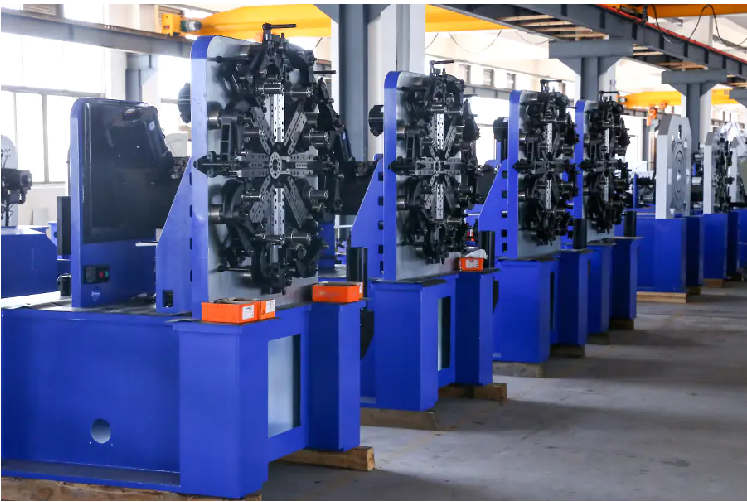
A wire forming machine is a specialized piece of equipment designed to bend, shape, and form metal wire into specific two-dimensional or three-dimensional configurations.
Unlike traditional manual bending methods, modern CNC wire forming machines use servo motors and computer-controlled systems to automatically feed, bend, rotate, and cut wire into precise shapes.
These machines can produce simple hooks as well as complex custom wire forms with excellent repeatability and efficiency.
How Does a Wire Forming Machine Work?
The wire forming process generally consists of several steps:
Wire Feeding
Metal wire is continuously fed from a wire spool into the machine through feeding rollers.
Straightening
The wire passes through straightening units to eliminate curvature and ensure dimensional accuracy.
Bending and Forming
Servo-controlled tools bend and shape the wire according to programmed parameters.
Rotation
The wire may rotate to create complex three-dimensional geometries.
Cutting
Once the desired shape is completed, the machine cuts the finished part automatically.
This entire process is controlled by the CNC system, ensuring high precision and repeatability.
What Materials Can Wire Forming Machines Process?
Modern wire forming machines can process a variety of materials, including:
Carbon Steel Wire
Commonly used for industrial parts and hardware components.
Stainless Steel Wire
Suitable for medical devices, food equipment, and corrosion-resistant applications.
Spring Steel Wire
Widely used for clips, retainers, and functional wire components.
Copper Wire
Ideal for electrical and conductive products.
Aluminum Wire
Lightweight and suitable for decorative or low-load applications.
Phosphor Bronze Wire
Frequently used in electronics and electrical connectors.
Different materials require corresponding parameter adjustments to achieve optimal forming results.
Types of Wire Forming Machines
CNC Wire Forming Machine
Computer-controlled machines capable of producing complex wire shapes with high precision and flexibility.
2D Wire Forming Machine
Designed mainly for flat wire bending and simple shapes.
3D Wire Forming Machine
Capable of producing complex three-dimensional wire forms using multiple servo axes.
Spring and Wire Forming Machine
Combines spring manufacturing and wire forming functions in one machine.
Multi-Axis Wire Forming Machine
Suitable for intricate wire parts that require high-speed and highly accurate forming.
What Products Can Be Made?
Wire forming machines can manufacture:
Wire hooks
Clips
Brackets
Retainers
Display racks
Basket components
Automotive wire forms
Medical wire parts
Electronics components
Custom-shaped wire products
The flexibility of CNC technology allows manufacturers to produce a wide variety of customized parts.
Which Industries Use Wire Forming Machines?
Automotive Industry
Used to produce clips, retainers, seat components, and other precision wire parts.
Electronics Industry
Manufactures conductive components and connector springs.
Medical Industry
Produces surgical instruments and precision wire products.
Home Appliance Industry
Creates wire racks, handles, and support components.
Hardware Industry
Manufactures hooks, brackets, and fastening parts.
Furniture Industry
Produces frames, supports, and wire accessories.
Advantages of CNC Wire Forming Machines
Modern CNC wire forming machines offer numerous benefits.
High Precision
Servo control systems ensure excellent dimensional consistency.
High Production Efficiency
Automated processes significantly increase productivity.
Quick Program Changeover
Saved programs allow rapid switching between products.
Reduced Labor Costs
One operator can often manage multiple machines.
Flexible Production
A single machine can produce various wire shapes and products.
Lower Material Waste
Precise forming minimizes scrap and improves material utilization.
How to Choose the Right Wire Forming Machine?
When selecting a wire forming machine, consider:
Wire diameter range
Product complexity
Material type
Production volume
Number of servo axes
Required accuracy
Future expansion needs
Choosing the right machine helps maximize productivity and improve return on investment.
Why Choose Yinfeng Wire Forming Machines?
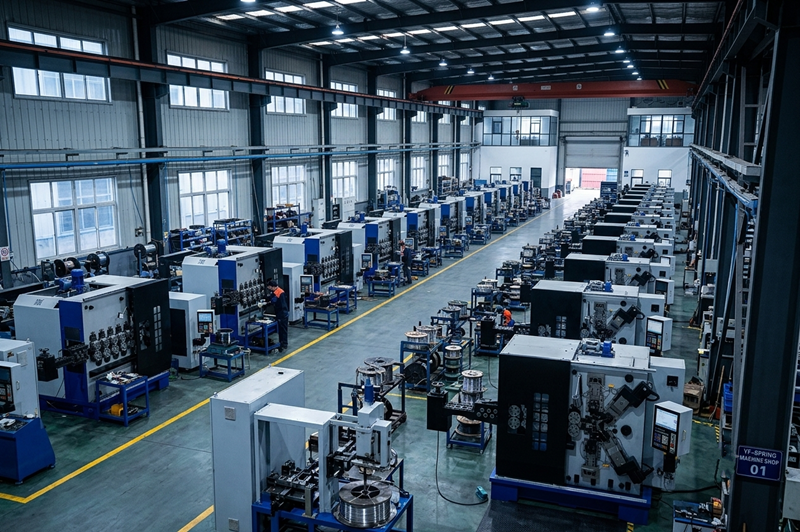
Yinfeng provides advanced CNC wire forming solutions with:
High-speed servo systems
Stable performance
User-friendly control systems
English and customized language support
Program storage and reuse functions
Technical support and training services
Solutions for a wide range of wire products
These advantages help manufacturers improve efficiency and achieve reliable production.
Conclusion
A wire forming machine is an essential tool for producing precision wire components efficiently and consistently. With advanced CNC technology, modern wire forming machines offer flexibility, high productivity, and excellent product quality for a wide range of industries.
Whether you manufacture automotive parts, medical components, or custom wire products, investing in the right wire forming machine can help increase production efficiency and support long-term business growth.